// Table of contents
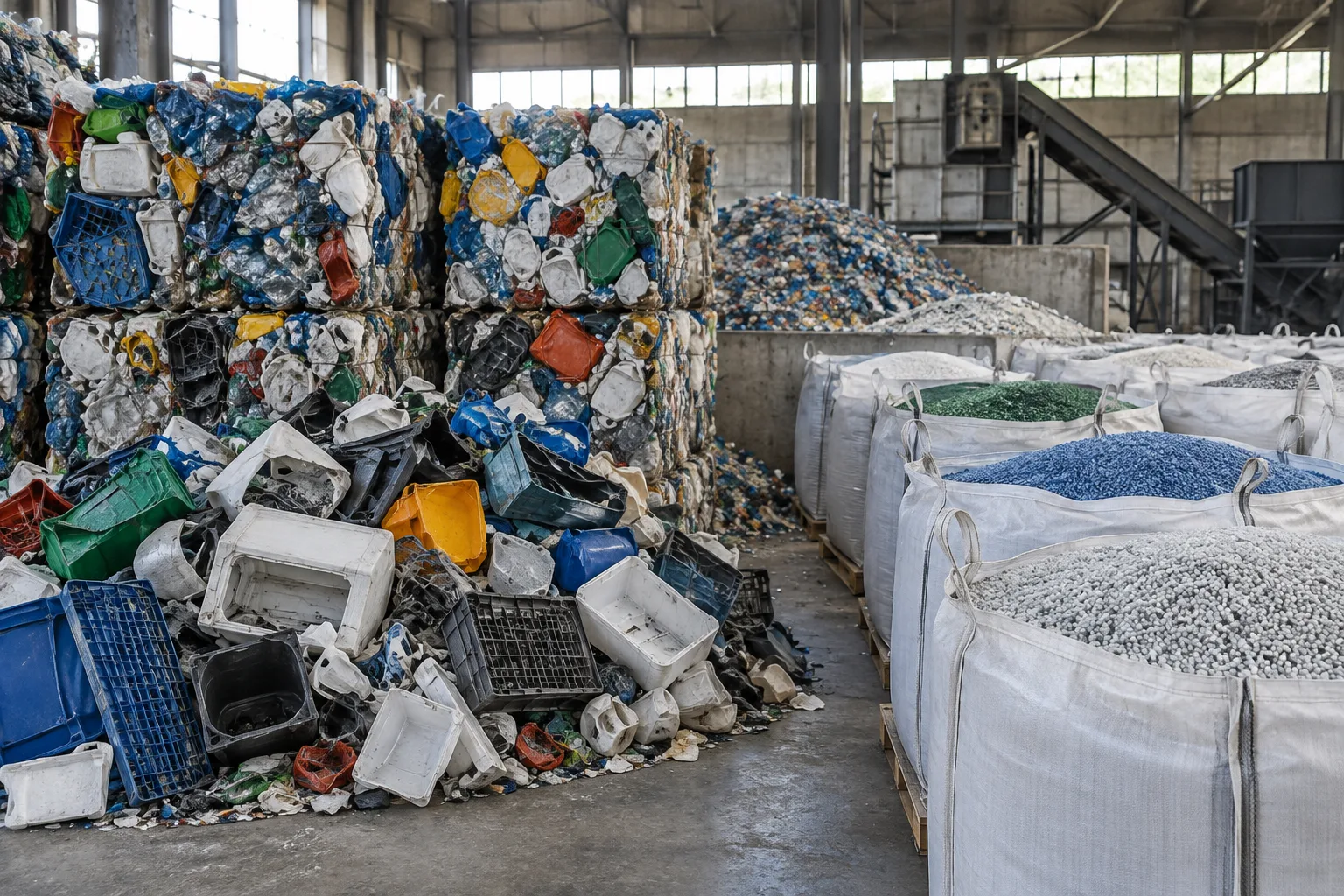
Europe’s rigid plastics recycling capacity grew by up to 30,000 tonnes a year on 20 October 2026, when Aliplast opened its R3GID plant in Modena. Aliplast belongs to Herambiente, part of the Italian Hera Group. The plant turns rigid plastic waste from household and industrial sources into polymers with certified purity above 99%. Hera puts the investment at €48.8 million, of which €7.7 million is direct support from Italy’s National Recovery and Resilience Plan (PNRR). The process runs on NX Replast technology from NEXTCHEM, a MAIRE group company. For buyers of recycled polymers, the new tonnes arrive in a market where plants have been closing and demand is weak.
What comes out of Modena
R3GID stands for Recover Recycle Regenerate Plastic. The feedstock is rigid plastic waste from municipal collection and from industry, including automotive, cosmetics, household chemicals and personal care, consumer electronics and furniture. According to Aliplast, the output is polymer with properties comparable to virgin material. Hera’s examples of end uses are components for televisions, computers and household appliances, and cosmetics packaging.
Part of the input comes from the same product sectors the recyclate can return to. That helps a brand that wants to tell a closed loop story. The plant also serves durable goods, so buyers of cosmetics and home care packaging will compete with appliance and electronics makers for the same output. The announcement does not split the 30,000 tonnes by polymer, colour or end market. Ask for that split before planning volumes around it.
Aliplast was founded in 1982 and has been part of Herambiente since 2017. Hera’s chief executive Orazio Iacono summed up the plant this way: “R3GID is our response as a first mover.”
A gap in rigid plastics capacity
Hera frames the investment with its own figures. According to the company, Europe has around 13.5 million tonnes of plastics recycling capacity, and only 3.5 million tonnes of it handles rigid plastics. Hera estimates that Europe will need a further 5.7 million tonnes of rigid recyclates by 2040.
The group is expanding on several sites at once. Once Modena, an LDPE expansion at Borgolavezzaro near Novara and the purchase of a 70% stake in Kronos Polymer Polska are complete, Aliplast’s annual capacity for high quality secondary raw materials will exceed 210,000 tonnes. Closing of the Kronos deal is planned by the end of 2026, so at the time of writing it remains a plan.
The wider market moves the other way. Plastics Recyclers Europe reported at the end of 2025 that Europe had lost close to 1 million tonnes of recycling capacity in about three years, across PET, polyolefin films, HDPE, PP and other streams. It named high operating costs, weak competitiveness against virgin plastics and cheaper imports as the causes. The Bureau of International Recycling (BIR) called current conditions in Europe bleak in its October 2026 report, with substantial capacity closures. One new plant in Italy will not reverse that trend, though it shows where investors still see a business case.
Questions for the specification sheet
A purity figure above 99% is a good start, but it describes the polymer, not how it runs on your bottle or closure line. Before qualifying material from a new rigid plant, ask the supplier:
- what share of each lot comes from post-consumer waste and what share from industrial scrap;
- which scheme certifies the purity figure and the origin claim, and how often it audits the plant;
- which polymer and colour grades are on offer, and whether packaging grades run separately from durable goods grades;
- what the plant tests for odour, colour drift and gels, and which tolerances it accepts.
The first question decides what counts towards legal targets. The feed mixes municipal and industrial waste, and the EU Packaging and Packaging Waste Regulation (PPWR) counts only post-consumer content towards its recycled content targets. Our explainer on post-consumer versus post-industrial recyclate covers what qualifies. The last question is about the production floor. Odour, colour and gels drive most PCR complaints, and they show up in production, not on a certificate. A trial run on your own line tells you more than a data sheet.
Regulation decides where plants get built
Italy’s environment minister Gilberto Pichetto Fratin opened the plant with a remark about timing: “R3GID is a clear example of how Italy can anticipate the challenges posed by new European regulations.” Two EU laws create demand for the kind of material Modena makes. The PPWR sets minimum recycled content for plastic packaging. The End-of-Life Vehicles Regulation, which the Council adopted with recycled plastic requirements for new cars, pulls on the same rigid streams, and automotive waste is already part of the plant’s feed.
Hera also points to a cost Italy pays today: about €800 million a year in EU contributions on non-recycled plastic packaging waste. If the plant’s entire output went into packaging, Hera estimates a saving of about €24 million a year. It also puts avoided emissions at around 30,000 tonnes of CO2e a year compared with virgin plastics.
Mechanical capacity backed by legal demand is getting built, while many announcements elsewhere stall, as our review of 65 chemical recycling projects in Europe shows. For a packaging buyer, rigid PCR supply will grow first where regulation forces offtake. Start qualification trials for cosmetics and home care grades now, and expect automotive and appliance buyers to bid for the same tonnes.
Frequently asked questions
What is the R3GID plant?
R3GID (Recover Recycle Regenerate Plastic) is Aliplast’s plant in Modena, opened on 20 October 2026. It can produce up to 30,000 tonnes a year of high quality recyclates from rigid plastic waste.
How much did R3GID cost?
The investment is €48.8 million, including €7.7 million of direct support from Italy’s National Recovery and Resilience Plan.
How much rigid plastics recycling capacity does Europe have?
According to Hera, Europe has around 13.5 million tonnes of plastics recycling capacity, of which only 3.5 million tonnes is for rigid plastics. Hera estimates that a further 5.7 million tonnes of rigid recyclates will be needed by 2040.