// Table of contents
June closed with declines across the entire recyclate curve. According to OPIS assessments at the end of the month, rPET flakes stood at EUR 1,331–1,341 per tonne and pellets at EUR 1,718–1,728, DDP Northwest Europe. Black rPP pellets lost 3.3% month on month to EUR 960–970. Demand remained weak across the majority of recycled polymers, with buyers purchasing minimally in anticipation of further falls through the summer shutdown period. For a packaging buyer that is comfortable in the short term and uncomfortable when contracting for 2027.
End-of-June 2026 assessments
All values are OPIS assessments, DDP Northwest Europe, euro per tonne, as at end of June 2026.
| Material | Form | EUR/t |
|---|---|---|
| rPET | flakes | 1,331–1,341 |
| rPET | pellets | 1,718–1,728 |
| rHDPE | natural pellets | 1,705–1,715 |
| rHDPE | white pellets | 1,500–1,510 |
| rHDPE | grey pellets | 1,111–1,121 |
| rPP | black pellets | 960–970 |
| rLDPE | grey pellets | 849–859 |
| rLDPE | black pellets | 803–813 |
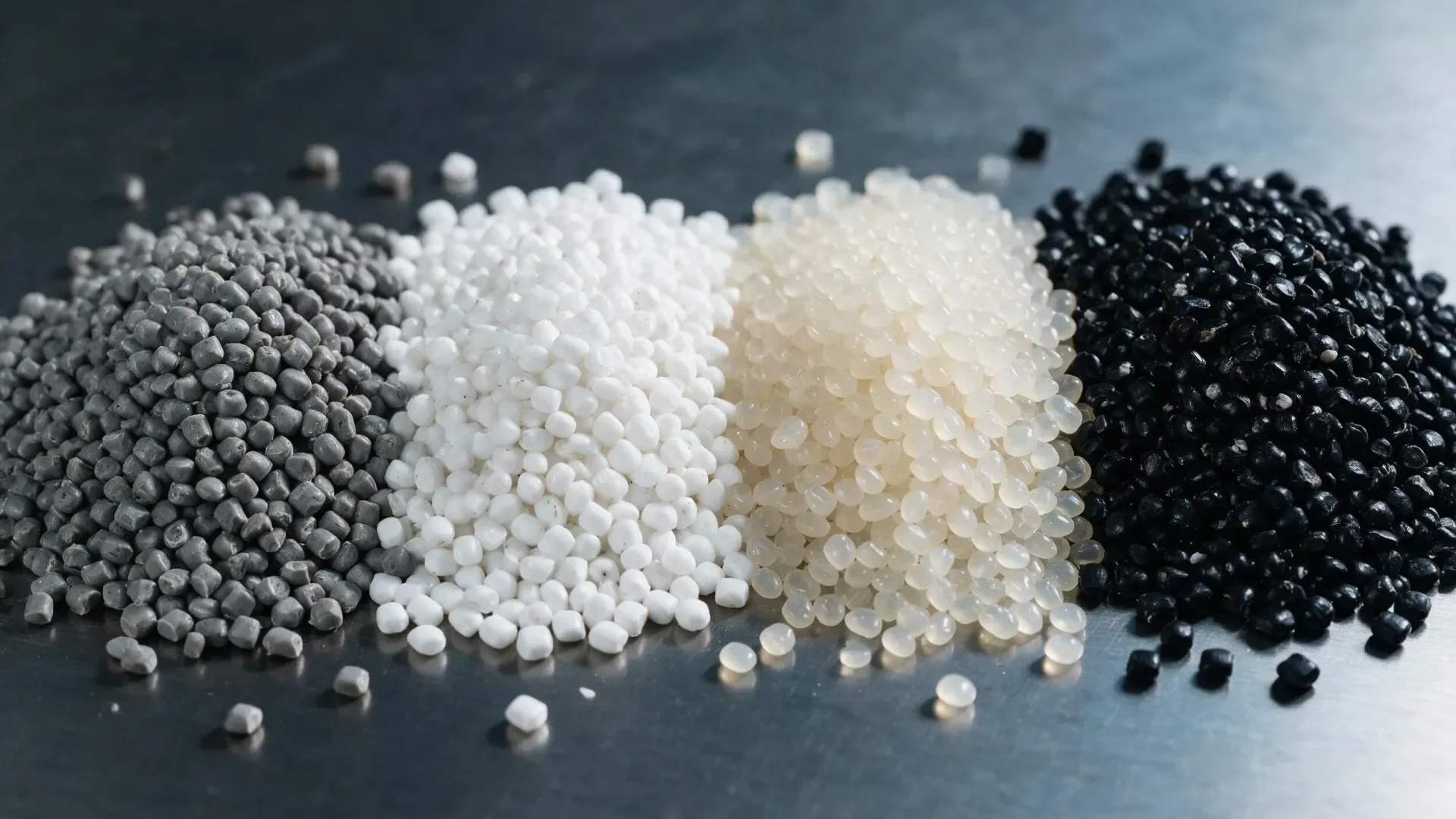
The spread within rHDPE tells you where the value sits in this market. Natural material commands roughly EUR 600 per tonne more than grey — more than the entire price of black rLDPE. That gap is not chemistry. It is collection and sorting quality.
Why prices fall while obligations rise
The apparent contradiction has a simple cause: mandated demand arrives later than cost pressure. PPWR has applied since 12 August 2026, but its recycled content targets start in 2030 — 30% for PET beverage bottles, 30% for other contact-sensitive packaging made primarily from PET, 10% for contact-sensitive packaging from other plastics. Until then, regulatory demand remains largely potential.
On the supply side, cheap virgin polymer does the work. Petrochemical overcapacity, largely Chinese, holds fossil-based resin at levels where recyclate loses its price advantage. The recycler carries the cost of collection, sorting, washing and extrusion while competing with material from a continuous plant with far better economies of scale.
The consequence shows in capacity statistics. EU recycling capacity was estimated at around 13.2 million tonnes in 2023, and roughly one million tonnes were lost by the end of 2025 — the equivalent of France’s entire capacity, taken out of the market in two years.
The risk the table does not show
Low prices are good news for a buyer for exactly as long as there is someone to buy from. At current levels part of the installed base runs below the profitability threshold, and closure decisions are typically taken over the summer, when shutdowns are scheduled anyway.
A structural change also lands this year. From 21 November 2026 the EU bans exports of plastic waste to non-OECD countries. An estimated 500,000 to 800,000 tonnes a year will have to be handled inside the Union. That will increase the supply of waste — mostly the poorer grades, since good feedstock stayed in Europe anyway. The net effect on high-quality recyclate prices is uncertain; the effect on the cost of disposing of reject fractions is rather more certain, and it points upwards.
How to use this window
- Contract volume, not spot price. With demand weak, suppliers will commit to quantities they would refuse in a tight market. That window will close.
- Assess supplier health, not only the quote. The lowest bid in a tender is sometimes a sign that someone is selling below cost to hold liquidity. That is not a partner for 2027.
- Qualify material now, not at the first shortage. Approving a new supplier takes months. Better done while there is a choice.
- Do not extrapolate June across the year. Assessments describe a point in time and a specific region, and summer shutdowns distort the picture in both directions.
Frequently asked questions
What did rPET cost at the end of June 2026?
OPIS assessed rPET flakes at EUR 1,331-1,341 per tonne and rPET pellets at EUR 1,718-1,728 per tonne, DDP Northwest Europe.
Why is recyclate getting cheaper despite tightening regulation?
PPWR recycled content targets only start in 2030, so regulatory demand is still largely potential, while cheap virgin polymer from petrochemical overcapacity removes recyclate’s price advantage today.
Why is natural rHDPE so much more expensive than grey?
Natural material comes from a colour-sorted stream and can be converted into products of any colour, including light shades. Grey material is a colour blend that cannot be lightened and is limited to dark applications. The gap is around EUR 600 per tonne.
Read next
- Post-consumer recyclate (PCR): what it is and how rPET, rHDPE and rPP are produced
- Food-grade rPET certification: EFSA, FDA, ASTM, ISO
- ISCC PLUS and mass balance: how the system actually works
Sources: OPIS price assessments for the European recycled polymer market, end of June 2026; capacity and export figures from market analysis published in July 2026; Regulation (EU) 2025/40 (PPWR) and Regulation (EU) 2024/1157.