// Table of contents
On 29 June 2026 the Council of the European Union formally adopted the regulation on circularity requirements for vehicle design and the management of end-of-life vehicles. For the recyclate market this matters more than the automotive label suggests. The car industry becomes the second sector after packaging to carry a hard, numerical recycled content obligation — and its demand will land on the same contracting supply base that packaging converters already rely on.
What was adopted
The path was typical for a file of this size: political agreement between Council and Parliament on 12 December 2025, endorsement by Coreper on 25 February 2026, formal adoption by the Council on 29 June 2026.
The figures that matter for feedstock:
- 15% recycled content in the plastic used to manufacture new vehicles, six years after entry into force.
- 25% as the ultimate target, ten years after entry into force.
- At least 20% of that recycled plastic must be recovered from end-of-life vehicles — a closed loop within the sector.
The regulation also introduces a vehicle circularity passport documenting materials and components throughout the vehicle’s life, tightens traceability of end-of-life vehicles and adds measures against illegal exports and so-called missing vehicles. At the Council’s insistence, scope was extended to two- and three-wheel vehicles and quadricycles, which previous ELV legislation did not cover. Future recycled content targets for steel, aluminium and critical raw materials remain possible.
Why packaging buyers should care
Directly, they should not. Indirectly, very much so.
Automotive consumes polypropylene and polyethylene principally in technical applications: bumpers, interior trim, housings, sound insulation. Those are precisely the fractions that packaging converters buy for non-food uses and that household chemical producers use for bottles and canisters. A large, regulation-driven demand entering that segment will intensify competition for technical-grade rPP and rHDPE.
Set that against current prices. At the end of June 2026 black rPP pellets were assessed at EUR 960–970 per tonne, down 3.3% month on month. That is a level at which some recyclers operate at the edge of viability. Structural demand from automotive is an investment argument for them — but the effect will only show once the clocks measured from entry into force start running.
The closed-loop clause and its side effect
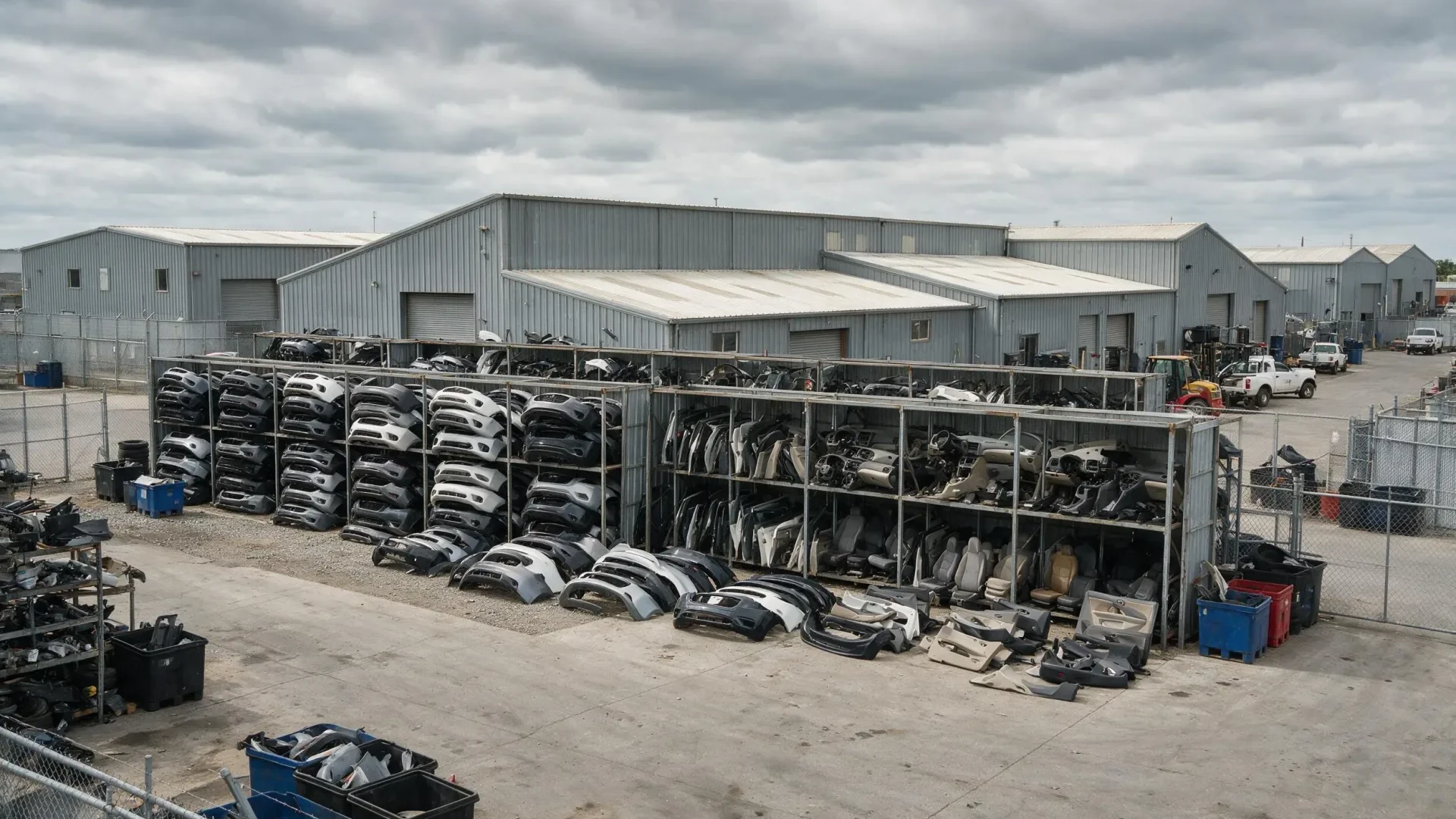
The most interesting element is the requirement that at least 20% of the recycled plastic in new vehicles comes from end-of-life vehicles. That forces the construction of a dedicated chain: dismantling, separation of automotive plastics, recycling to technical grade, and return to vehicle production.
Two consequences follow. First, plastics from vehicle dismantling — today largely destined for low-value applications or energy recovery — gain both interest and price. Second, and this is the part that matters for packaging: automotive will source at least a fifth of its requirement from its own stream rather than from the general recyclate market. That softens the competitive pressure without removing it, since the remaining 80% of the target may be met with material from any source.
What not to assume
The Council has adopted the regulation, but the six- and ten-year clocks run from entry into force, not from adoption. Publication in the Official Journal and the entry-into-force period still lie between. Any calculation that lands on a specific calendar year is currently an estimate, not a date.
Nor should one assume that automotive demand will lift all recyclate prices. Quality requirements for structural plastics in vehicles differ from packaging requirements — different mechanical properties, different rules on emissions from interior materials, different testing. Recyclate that meets packaging specifications is not automatically automotive material, and the reverse holds too.
What to do now
If you buy rPP or rHDPE for technical applications, two things are worth checking with suppliers over the coming months. Whether they intend to enter automotive qualification, because if so part of their capacity will be redirected. And whether their feedstock is secured, because competition for PP from dismantling and from industrial waste will grow.
For food packaging portfolios the direct impact is negligible: food-grade rPET and automotive plastics are disjoint markets. But for a total packaging budget that also contains transport, secondary and non-food packaging, this file is a variable that belongs in the model.
Frequently asked questions
How much recycled plastic will new vehicles have to contain?
At least 15% six years after the regulation enters into force and 25% after ten years. At least 20% of that recycled plastic must come from end-of-life vehicles.
Is the ELV Regulation already in force?
The Council formally adopted it on 29 June 2026. The deadlines for meeting the targets run from entry into force, which follows publication in the Official Journal, not from the date of adoption.
Does the regulation cover motorcycles?
Yes. At the Council’s request, scope was extended to two- and three-wheel vehicles and quadricycles, which were not covered by previous end-of-life vehicle legislation.
Read next
- Post-consumer recyclate (PCR): what it is and how rPET, rHDPE and rPP are produced
- Chemical recycling in Europe: pilot and commercial plants
- ISCC PLUS and mass balance: how the system actually works
Sources: Council of the European Union, press release of 29 June 2026 on the adoption of the regulation on vehicle circularity; Council and Parliament provisional agreement of 12 December 2025. rPP price assessment: OPIS, end of June 2026.